Friday, December 31, 2021

2021 Weekend Whiskey of the Year

I understand 2021 was rough for businesses, so I'm not complaining, merely observing that once again I wasn't sent a single free whiskey sample.*

Tout comprendre, c'est tout pardonner. But it does mean, when it comes to picking my whiskey of the year, I'm limited to what I bought on my own.**
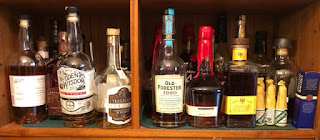


You get what you pay for.

Playing the odds, that makes it likely to be an American whiskey, since I bought very little scotch this year. More due to availability and price, I think, than preference -- though my cocktail habit hobby does require more bourbon and rye.

I wish I could say Leopold Brothers Three Chamber Rye is the Weekend Whiskey of the Year, and not just because it was more than twice the price of anything else I bought. It has a great story, and was something I was looking forward to trying from the moment I read about it a couple of years ago. After the release, I tracked down the bottle with the help of the local distributor, opened it the day I bought it, poured a taste, and... yes, it's quite different, and interesting, and complex. But I don't really like it. ***

Otherwise, I bought a respectable amount of homer booze from Maryland distilleries. Baltimore Spirits Company's Epoch Rye is my favorite Maryland distilled whiskey, and a contender for Weekend Whiskey of the Year, but it's finishing as this year's runner-up. I'm going to a blend-your-own rye event at BSC next week, though, which you'd think will result in an early favorite for 2022.

Which means that...

The 2021 Weekend Whiskey of the Year is Maker's Mark 101. The Goldilocks of Maker's Mark, it benefits from a just right proof and a featured role at the delightful Christmas Eve I spent with my family just last week. Also, it's delicious.
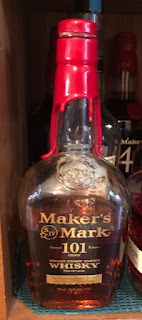

2021 Weekend Whiskey of the Year.

Yeah, I know. Same bourbon they've been making for sixty years, a watered down version of the cask strength they've been selling for years, finished in the same bourbon barrels it started in. 

But I like it. This year, that's enough.

----

* Though, improbably, I was sent a dozen free agave spirit samples from S.A.C.R.E.D. as part of a Tales of the Cocktail related promotion. I tried a couple samples during an online Zoom event. They seemed well made, but I tend to find good mescal and tequila more interesting than tasty, so I haven't yet made time to complete the tasting.

** For pandemic related reasons, I didn't spend much time ordering at random in whiskey bars this year.

*** I am planning on trying it again in a month or two, after the initial disappointment has faded. Maybe I'll appreciate it more.

2021 Year in Review

 Meh.

Sunday, October 17, 2021

If Cocktail Recipes Read Like Recipes

You know what they say is the number one rule in real estate: 

LOCATION, LOCATION, LOCATION!

That's certainly the case with my house, which is just a couple of blocks away from a short trail through the woods that takes you to a nearby stream. When the kids were young, we spent many a sunny weekend afternoon playing along -- and splashing in -- the water. 

Those memories come back whenever I think of this recipe. Why, you ask? Because the name of the stream is Northwest Branch.

Surprise! The name "Bourbon and Branch" doesn't refer to a piece of a tree, it's actually "branch" as in "a tributary stream or any stream that is not a large river or a bayou." Thank you, Dictionary.com!

I know what you're thinking: What do tributary streams have to do with bourbon? A lot, as it turns out. See, "Bourbon and Branch" is really short for "Bourbon and Branch Water," and "branch water" is simply a Southern term for fresh water from your local stream. Isn't that charming!

WHAT IF I DON'T HAVE A LOCAL STREAM?

Now, before you say, "Gosh, do I have to move near a stream just to make this recipe?" let me assure you the answer is NO. I don't know if Nineteenth Century Kentucky gentlemen would approve, but you don't have to use actual branch water when you make this drink. Bottled spring water works just fine -- that's the kind of water I usually use, and it's what the ingredient below calls for.

SAFETY FIRST

I'm no doctor, so this doesn't constitute medical advice. But if you do have a local stream, please make sure the water from it is safe to drink before using it in a Bourbon and Branch. The National Park Service, which ought to know a thing or two about the topic, has this to say about drinking from a stream:

Never drink water from a natural source that you haven’t purified, even if the water looks clean. Water in a stream, river or lake may look clean, but it can still be filled with bacteria, viruses, and parasites that can result in waterborne diseases, such as cryptosporidiosis or giardiasis. It is essential that you purify natural water. Purifying water involves filtering to remove large particles and treating by boiling or with chemicals to kill organisms such as bacteria, viruses and parasites.

 As delicious as a well made Bourbon and Branch is, it's not worth the risk of -- yuck! -- parasites. Diarrhea, stomach aches or pain, dehydration (ironic, right?), nausea and vomiting, and gas as not Good Things, with apologies to Martha Stewart. 

Now, you might think, oh, the alcohol in the bourbon will sterilize the water. But as we've learned from the pandemic (boo!), an effective sanitizer needs to be at least 70% alcohol, and even using the strongest cask strength bourbon you can buy, with the added water the result won't be potent enough to guarantee your safety. Better safe than sorry!

VARIATIONS

True, I usually follow the given recipe and use spring water. But not always. Sometimes I use a reverse osmosis product like Dasani (sponsored link) -- and don't worry, despite the chemical process involved, the result is still delicious, I promise!

Once I used distilled water, which is kind of meta, when you think about it. Distilled spirit + distilled water = yummy!

And please don't think my life is perfect, with fancy bottled water on hand at all times. Things can get pretty crazy at Casa Weekend Whiskey, I assure you, and I'm not always on top of my shopping list. I'm the first to admit that I'm not above using plain old tap water for those times when I get a hankering for a Bourbon and Branch, only to find there's no bottled water in the house. And guess what? The results taste just as good!

TO ICE OR NOT TO ICE

Now that's a touchy question! Newbies might be surprised at how -- let's say, passionate some people are about whether a Bourbon and Branch comes with ice. I'm not going to get into the whole back and forth here. I'll just say that the research I've done suggests the traditional recipe is without ice.

Now, when you say "traditional recipe" that's usually a promising thing! It means something was good enough to be done the same way long enough to become a tradition.

But "traditional" doesn't mean "the only way a thing can ever be done." You might even say people have been putting ice in Bourbon and Branches long enough to make that traditional, too.

Here are my thoughts: I admit I usually don't use ice. But sometimes  -- usually on a hot summer afternoon, but other times too -- I just feel like adding ice, and I do, and I like it just as much that way.

So, should you use ice? I say, try it with and without ice, and see what you think. Make it the way you like! And if a Nineteenth Century Kentucky gentleman drops by for a visit on a hot August day, he just might like it with ice too!

RECIPE

Bourbon and Branch
  • Bourbon
  • Spring water
  • Ice (optional)
Combine ingredients in glass and serve. (Makes one serving.)

Saturday, September 19, 2020

The Manhattan Project

One great thing about the Manhattan cocktail is how much variety the structure of the drink affords.

You have whiskey, you have vermouth, you have bitters, you have garnish.

Which whiskey? Bourbon, rye, Canadian, American[, corn, malt, spelt]? Within the categories, which specific brands?

Which vermouth? Sweet, dry, both? Within the categories, which specific brands?

Which bitters? Which garnish?

And what's the ratio?

The answer to one question depends on the answers to the other questions. The same whiskey with different vermouths may call for different ratios and different bitters.

The circumstances can also change how a Manhattan might be made, and not just in terms of the ingredients. Any proper Manhattan is stirred and strained into a chilled cocktail glass...but maybe there are times and places for improper Manhattans, served on the rocks, or even at room temperature.

A while back, I spent a week working on my house Manhattan recipe. It took a full week because, on the one hand, each experiment resulted in a drinkable cocktail. I judge a cocktail in part on how it feels drinking it, and it always feels different when it's the second cocktail of the day evening, so I limited myself to one experiment a day.

It took only a week, on the other hand, because after five or seven variations I'd found one that was 

a) tasty enough, with the differences from experiment to experiment getting pretty small; and

b) just fussy enough to make me feel like I'm doing something a little special, without working too hard at it.

So here's my current House Manhattan recipe:

  • 2.5 oz Rittenhouse Rye Bottled in Bond
  • 1 oz. Boissiere Sweet Vermouth
  • 1 dash Angostura bitters
  • 1 dash Peychaud's bitters
  • 1 Luxardo maraschino cherry for garnish

Add rye, vermouth, and bitters to stirring glass. Add ice (8 cubes, if you have the same ice maker I do). Stir 64 times. Strain into chilled cocktail glass. Place cherry in bottom of glass.

Saturday, April 1, 2017

An evening with Dave Pickerell and Hillrock

When I heard about the tasting at Magruder's of DC, I was more interested in Dave Pickerell than Hillrock Estate Distillery. And I have to say he turned out to be more interesting than the whiskeys I tasted.

If you don't know, Dave Pickerell was master distiller at Maker's Mark for fourteen years, and in the last decade he's become the Johnny Appleseed of craft distilleries. He's now master distiller at Hillrock in New York, and more famously (or notoriously) at Whistlepig in Vermont. He mentioned that he's part owner of six (I think it was) distilleries; I don't know whether he was counting the Mount Vernon Distillery, where he's the master distiller for the six weeks a year they make whiskey.

The night's line-up.
The Hillrock angle is terroir. They grow all their grain, have their own malt-house, use their own well water, and if I'm remembering correctly use local wood. Pickerell sees this sort of localization as a feature of American craft distilling, so that all American whiskey doesn't have to taste like Kentucky bourbon made with limestone filtered water and Ozark oak and corn from wherever it is that Kentucky bourbon corn comes from. One thing they've noticed about Hillrock is that all the distillates come with a cinnamon spice note. So cinnamon is part of the Hillrock terroir. (Pickerell assured us that, if different Hillrock fields produce grain that produces distillate with different notes, they'll figure that out pretty soon too.)

We tasted five whiskeys:
  • Solera Aged Bourbon. This was probably my favorite of the night, and has the most interesting story. Pickerell copied the solera setup from a Spanish sherry outfit -- I think it was Spanish sherry, the point is they knew what they were doing. Hillrock has four tiers, with the bottom tier sherry casks, the two middle tiers used (bourbon?) casks, and the top -- because this is bourbon, after all -- new charred American oak barrels. The hard part, the story goes, wasn't getting the solera set up and functioning, it was figuring out how to do it within U.S. regulations for the manufacturing and taxing of bourbon whisky. They can call it "bourbon" because they empty the top level (the "nursery") one barrel at a time, without topping them off (and the other barrels used aren't "barrels," they're small wooden "containers.") They can call it "solera age" because the age of the youngest whiskey doesn't help the customer when the weighted average age is more than four years, as Pickerell assured the TTB it would be, but you can't use the weighted average age on a bottle either. My notes say "spicy and raisiny." The bourbon now being bottled is about 40% rye; what's going into the nursery is about 49% rye, to keep the bourbon moving in the savory direction chefs tell Pickerell the American palate is moving.
  • Double Cask Rye finished in Sauternes Casks. The "double cask" part refers to the rye (100% rye mashbill) beginning in smaller casks, then being moved to larger ones. The Sauternes finish is, like all of Pickerell's finishes, somewhere between 2 and 10 weeks. It gives the rye a honey-sweet, floral nose. The house cinnamon was very strong on the finish. For me, this is more of a "hey, have you ever tried something like this?" whiskey than something to reach for when you want a rye.
  • Double Cask Rye finished in Port Casks. Same rye, different finish, very different effect. If the Sauternes rye is like a soprano -- which it isn't, of course, it's a whiskey, but stay with me here -- then the port rye is like a bass, low and solid. Maybe some chocolate notes, solid and simple on the palate. The rye spice seems subdued. I'd like to try this in a dry Manhattan, with the vermouth playing off the port.
  • Double Cask Rye. An unbilled special guest, this was the same rye that was otherwise finished in Sauternes or port. It was a late addition to the line-up, and if we had to do it over, this should come before the two finished ryes. As it is, it made no real impression on me. My notes read, "Not sure what to think," which I now think reflects on a lack of rye character. I have a terrible palate, so I may be completely off base, but the impression I came away with is that Hillrock rye whiskeys are more whiskey than rye. Which isn't to say I refused a second taste of this; it's a properly made sippin' whiskey. But, at least at this point in the evening, the lack of distinguishing notes was the only note I could distinguish.
  • Malt Whiskey finished in Olorosso and XO Sherry Casks. This is Hillrock's opening volley in producing a heavily peated "Scotch," which is what the owner likes to drink and wants to make. If I have it right, part of the malt whiskey (100% malted barley mashbill) was finished in olorosso, and the rest was finished in XO, then the two were combined. The whiskey was simply baffling to me. There was a little smoke, but more like a midrange blend than an Islay single malt. I got orange hard candy on the nose... and, um, canned peas. "Canned peas" is not one of those "sounds bad but true connoisseurs find such things add to the experience" notes; it's one of those "whiskey shouldn't smell like canned peas" notes. On top of that, there was the cinnamon on the palate. The whole thing was weird. I didn't seem to be drinking the same whiskey that was being described (well, except maybe for one other attendee who suggested manure on the nose).

The evening ended with the other attendees lining up to get bottles signed. I could have applied the $20 ticket price toward a purchase, but I decided even with the discount I didn't need a bottle of Hillrock. Is the Solera Aged Bourbon worth $63? Maybe, but that night it wasn't worth 63 of my dollars.

As you'd expect given Pickerell's experience, Hillrock is miles ahead of the vodka-n-gin-n-rum-n-whiskey microdistilleries who can't or won't age their whiskeys properly. But he says he doesn't just want to outrun the other guy, he wants to outrun the bear. I think that's the right attitude, but for my taste Hillrock should still be grateful there are slower distilleries in the race.

Big Fred and the Dude

Every Friday, gaz regan's email newsletter -- click here to sign up -- includes a "potent quotable," a short passage on bar life, usually from way back. They're always entertaining, but some are more memorable than others. If Damon Runyon had used a couple of them in his stories, his editor would have told him to dial it down.

On other days of the week, you get a cocktail recipe. These are by and for the pros, so they'll have two kinds of amari, or Enzo's muskrat bitters or what have you. They may be delicious, but they aren't meant to be tried at home. Unless you are, or live with, a professional bartender.

Anyway, the most recent Potent Quotable includes a recipe for a Manhattan, which I'm posting here so I don't lose track of it:
'Bartender,' the dude said to Fred, 'mix me a Manhattan cocktail.' He couldn't have done worse. In that time and place a man who would drink a cocktail was considered on a par with a cigaret smoker, which was to say, a degenerate.

Big Fred didn't bat an eye. 'What kind did you say?' he inquired politely.

'Manhattan,' said the dude.

Big Fred went to work. He bit off a chew of the plug he liked and reached for a bottle. Putting one of the Humboldt's generous beer mugs on the bar, he poured a good shot of whiskey into it. To this he added a slug of gin, another of rum, a dash of real brandy, of bitters, of aqua vit', and then filled the remainder of the mug with beer. Placing this dose in front of the dude, accommodating Fred stirred it slowly with a huge forefinger.

'There, mister,' he said obligingly, 'is your Manhattan cocktail.'

-- Little Annie Oakley & Other Rugged People, Stewart H. Holbrook, 1948. ["Big Fred" Hewlett was reportedly the owner of The Humboldt Saloon, Aberdeen, WA., circa 1900.]

Saturday, January 23, 2016

Aultmore, The Deveron, Royal Brackla 12 y.o.s

Dewar's recently sent me samples of their three latest "Last Great Malts" they're bringing to the U.S. market. The idea behind the campaign is to offer expressions from different distilleries that supply malt whisky for Dewar's blends. (I can imagine a "here, take my money" deal where they'd sell a blending kit of malts and grains with enough to taste individually and still blend into something not altogether unlike Dewar's.)

The bottles came, I admit, in enjoyably gimmicky packaging, including a sort of self-contained treasure hunt to find the code to unlock... a USB stick with additional marketing information.
Or, you know, you could just find the screws.
They're all 12 year old single malts, from Aultmore (a Speyside distillery dating from 1896), the Deveron (made at Macduff Distillery, which opened in 1962 and is billed as one of the earliest modern Scotch distilleries), and Royal Brackla (opened in 1812 at Cawdor, and surely others have commented on the Macbeth angle between Royal Brackla and the Deveron; pity Aultmore isn't in Birnam Wood).
If it were tasted when 'tis tasted, then 'twere well it were tasted quickly.

No less an authority than Serge Valentin recently wrote:
I need comparisons, and I’m not good enough to assess one whisky out of the blue at any given time... That’s also why so many people find that any whisky just smells and tastes of… whisky. Give them two whiskies, and they’ll become super-good very fast!
As someone who has had a lot of whiskey that smells and tastes of whiskey, I determined to take this advice and try all three at the same time. It's a convenient trio for this, since the colors are different enough that you can keep track even if you forget where you just set down the Aultmore.

Dark to light: Royal Brackla, the Deveron, Aultmore (which in the bottle kind of really does look like pee)

I did not become super-good, or even competent, but it is fun to pretend sitting in the kitchen drinking three whiskeys at once is how you're supposed to do it.

(Prices are from binnys.com.)

Aultmore 12 YO (46% abv, natural color, non-chill filtered, ~ $60)
Nose: Honey, grassy
Palate: Light, honey, sweet; a little water rounds it out a bit and brings the honey forward
Finish: Warming and short, a bit sour

The Deveron 12 YO (40% abv, ~ $45)
Nose: Fruit, almonds, oak, maybe chocolate
Palate: Buttery, sweet, a hint of brine (water makes it watery)
Finish: Pleasant and short

Royal Brackla (40% abv, ~ $50)
Nose: Sherry sweetness, raisins, toasted raisin scones; a bit of a waft of sweat or chemicals; water makes it fruitier
Palate: Pretty much what it says on the nose, with a touch of smoke
Finish: First pour, the finish was raisiny rubber. actually kind of nasty; subsequent drinks were much nicer

The take-away: There's all decent, if unexceptional, malt whiskies. (At least once that industrial rubber taste left the Royal Brackla; if it had stayed, I'd've used it for solvent.) Older expressions are available for each, if you're curious about how they might age. The Royal Brackla, with its blast of sherry and raisins, is the most distinctive, but I suppose I'd say the Deveron would be my first choice among them if I were to buy a replacement bottle.

Sunday, January 17, 2016

The Baltimore Whiskey Company

My plans for last Saturday fell through; my wife's plans did not. This left me with an unchaperoned afternoon, which I decided to spend seeing the sites in Baltimore.

The first site chosen was the Baltimore Whiskey Company. They are open for tours on Saturday from noon till four, and I'd be getting there right around noon.

"There" is the hindquarters of an unpreposessing brick building in Jones Falls. I got the Jones Falls bit off their website; I know almost nothing about Baltimore neighborhoods. The rest of the description of "there" I got from personal experience.
The entrance. You want fancy, go to the waterfront, hon.
I love distilleries that, from the street, could be galvanized chain warehouses. It suggests a small company focused on manufacturing, which is a very good thing to focus on if you're a small company that manufactures things.

Can a whiskey company door get more Baltimore than this?
The Baltimore Whiskey Company, of course, manufactures gin.

Well, and whiskey too. They are building up stock, from a rye and malted rye mashbill, that will age in 53 gallon barrels for two years before it hits the market. I admire them for that, considering very young ryes do sell these days, and some of them are even good decent drinkable. (If they offered samples of their aging rye to select tourists, that would be okay too.)

In the meantime, cash must flow. To make their gin, they macerate botanicals in grain neutral spirit (sourced, if we say "sourced" about pharmaceutical grade GNS; their copper pot still isn't ever going to give them a pure enough spirit), run it through the still a couple of times, and bottle it at 100 proof as Baltimore Shot Tower Gin. (The shot tower, a Baltimore landmark, is also featured on their logo.)

On my visit, the open 500-gallon fermenters -- they're cypress, and they're spectacular -- were filled with apple juice bubbling away, post-pressing peels and such floating on top. This will show up this summer as Charles St. Apple Brandy, following some months in used rye barrels. (The barrels are purchased from Speyside Cooperage, which opened a Kentucky office in 2010, so they're probably from one of the major distilleries.) I'm easing into apple brandy as a hobby, so I'm really looking forward to getting some Charles Street when it comes out.

They're also excited about a ginger apple liqueur -- their brandy "macerated with ginger and other botanicals, and distilled ... then sweetened with molasses, sugar, and apple juice" -- that's coming soon. It sounds like it could make a fantastic toddy, or bread pudding sauce.

Apple brandy in its larval stage.

There was no distilling going when I was there, so I got a good look at the inside of their still. The still, mashtun, and fermenters were all made by different independent craftsmen from around the country; the BWC operation is sort of a compounded craft effort, which is kind of cool -- always assuming the whiskey turns out good.

The freshly scrubbed inside of the 250 gallon still.

The outside of the still.
The left side of the still.
The Shot Tower Gin was the only spirit available for tasting. I admitted I didn't like gin. They said they get that a lot and like to hear what non-gin drinkers think of their gin.

It's the juniper that always gets me. Pine trees aren't people food. I'm happy to say BWC's gin is not particularly heavy on the juniper; you'd never take it for a London dry gin. I could even convince myself it tasted more like an herbal infused aquavit than a gin. It's not something I needed to buy, but I wouldn't wince if someone poured me a glass and I can believe Baltimore bartenders are coming up with good recipes that use it. I hope to try the "barrel rested" gin they'll be releasing in several months; I expect I'd be able to make some cocktails both my Sapphire-drinking wife and I would enjoy.

It's a bit sad to finish a post on a distillery visit with talk of gin, but considering that the Baltimore Whiskey Company started distilling in November, maybe it's just as well. I shall watch their future career with interest, and no doubt some investment as the product line matures.

Wednesday, January 13, 2016

My integrity is not for sale, I'm giving it away

The other week, Dewars asked me if they could send three bottles of their new-to-the-US single malts for me to review on my channels. "Certainly," I replied instantly. Only later did I face the nagging question raised by accepting their proposition:

I have channels?

Some people say taking free samples compromises a blogger's integrity and makes the reviews worthless. In my case, at least, that's not true. All my reviews are worthless. And I'd never write that a free whiskey is better than I think it is just to get more free whiskey. That would only work if marketers read my blog. But if they did that, they'd surely move on to a blogger who hadn't peaked ("hillocked" may be more accurate) with his 2012 hotel room review of Old Thompson Brand American Whiskey. Checkmate, integrity questioners!
This blog's all-time pageview champion. (Yes, the scale is pageviews per month. Yes, that includes Russian spiderbots.)

I got as far as the above with this post after two of the three bottles arrived. That evening, I mentioned to my 18-year-old son that I expected yet another bottle to arrive the next day. He asked, "Who is sending you all this whiskey?"
"Dewars."
"What's a doer?"
A reasonable question under the circumstances. After I answered, he asked the question I'd been asking myself: "Why are they sending it to you?"
"I guess so I'll mention it."
"You should! Then you'll get more free stuff!"
He went on to say that I shouldn't be too obvious, but subtle, like, "You might want to give this a try sometime."
The boy's got the angles worked out already.

Sunday, January 3, 2016

A taxonomy of "craft" distilleries

The on-going debate over the meaning of the term "craft" in whiskey-making shows no signs of ending. (Even though, as is so often the case, the answer is waiting to be found in the dictionary: "Craft: skill used in deceiving others.")

Here, though, are the broadly accepted definitions of some other terms you may hear used to describe your favorite new distillery:

  • Grain to glass: A distillery that turns grains into bottled spirits. In other words, a distillery. Even MGP is bottling these days.
  • Flour to flask: A distillery that couldn't afford a milling machine but does have a gift shop.
  • Soil to slainte: A distillery that grows its own grains and has a tasting room. Just as well, because after all the pretensions about growing their own grain, you really need a drink.
  • Tanker to tasting: A "distilling company" that "produces" its "own" spirits, often according to an "old" "family" "recipe."
  • Cradle to grave: Diageo's vision statement. Resistance is futile, or at least discouraged.
  • Farm to under-the-table: A moonshiner.

Thursday, December 31, 2015

A trip to Fishpaw's Marketplace

I just want those who could have told me about Fishpaw's Marketplace, but didn't, to know that I forgive you.

Some people go skiing between Christmas and New Year's, some go to Disney World. And some people go somewhere fun.

Whoever it was who left a comment I read on some blog post, stating that Fishpaw's -- in Arnold, Maryland --  is a good place for private selection whiskey,  thank you.

What I didn't realize, as I used part of a vacation day to drive the forty miles to Arnold, is that they would have four different single barrel whiskeys, all of which were available to taste. If I had, I would have brought a designated driver. And maybe left my credit card at home.

The lunch menu. (Photo stolen from their website.)

I was particularly interested in the Eagle Rare, since I'd had a private selection ER at Dry 85 in Annapolis that was probably my favorite bourbon of the year. Then I saw the Four Roses, and realized I was facing a quandary. The single barrel Crown Royal Coffey Rye was also eye catching. And what could be wrong with a single barrel Knob Creek?

The tasting bar serves 1/2 ounce and full ounce pours. When you're forty miles from home and you need to pick up your wife, who didn't get the week off work, in a few hours, you don't order full ounce pours. I'd have preferred 1/4 ounce each, which would be enough to make a purchasing decision, but I can adapt.

I started with Four Roses and Eagle Rare. The Four Roses was an OBSV.(as their non-limited edition single barrels are), 115 proof, and a lot more interesting and complex than is appropriate for standing at a tasting bar next to a wine distributor trying to make a sale to the owner. I would have liked a bottle, but in the end I wasn't ready to pay the premium for this bottle over the regular 4R SB.

The Eagle Rare disappointed me. Maybe it was because it came on the heels of a barrel proof Four Roses, but it came off as muddled and not pleasant to drink. Especially disappointing, since it was on sale for $35. (Yes, yes, I should have bought two bottles and waited for my palate to improve.)

An ounce of cask proof whiskey on an empty stomach was enough, so I took a break from booze shopping to get some lunch. (I picked up a bottle of Laphroaig Cask Strength Batch 006 and a bottle of Fiore Sweet Cranberry Maryland Moonshine, which earned me a, "So you're buying moonshine instead [of 4R SB]?" at the cash register.) Just up Route 2 is Cafe Mezzanotte, which has a $15 lunch special and delicious cream of crab soup. (The crab soup isn't quite worth the trip alone, but I will definitely try to time my next visit to Fishpaw's around mealtime.)

Worth a taste, but maybe not the best whiskey of 2015.
Refreshed and with a reset palate, I came back to Fishpaw's ready to try the Crown Royal and Knob Creek. (The owner asked the server if I'd tried the Four Roses. She said, "Yes, but he bought Laphroaig instead." I said, "You keep saying 'instead.'")

The Crown Royal is a single barrel Coffey rye, a flavoring whiskey distilled on a Coffey still that's a main component of CR. It's quite an interesting drink, sweet and creamy, but there's something a bit off (soapy?) right at the beginning of each sip. It's definitely worth tasting, especially at a discounted $3 per 1/2 ounce, but alas, it's not the discount barrel strength Whistlepig I was kind of hoping for.

The Knob Creek -- following the complex, muddled, and unusual whiskeys I'd already tried -- was just a tasty bourbon that brought a smile to my face. The bottle was sold before I finished my first sip. I'll have more to say about it after I've had a chance to drink it under controlled laboratory conditions at home.


Longrow Red (Cabernet Sauvignon, 11 yo)

The Judge's Bench is a great local pub in Ellicott City, Maryland. It has around a dozen rotating taps of craft beer, and over 250 different whiskeys (including the largest selection of single malts in Maryland, they say). It's the kind of place where, when someone walks in, the bartender says, "Hey, we've got a new porter on tap," and pours them a sample before they've even reached the bar. (There's also that couple, sitting in the two stools closest to the door, that are doing their own thing. Last time it was Coors Light; this time it was pinot noir. What can you say to such people but, "Cheers!")

The only problem is that Ellicott City isn't particularly local to me. It's about a half hour's drive, in a direction I never go after work and rarely go on weekends. What with one thing and another, I only get to the Judge's Bench once every year or two, though I'm always happy when I do free up a couple of hours and drop in.

They have a few dozen bourbons, but the single malt selection is why I go. (Say what you like about the state of the industry, 2015 is a time when a few dozen bourbons on the menu can be met with a shrug.) On my visit yesterday, I decided I was in the mood for some Campbeltown, and settled for a Longrow Red.

By coincidence, if you believe in that sort of thing, this morning I came across a post at The Lyne Arm that gives the history of this expression:
Some years ago J & A. Mitchell & Co, the owners of Springbank distillers and Cadenhead became aware of an Australian wine company using the trademarked Longrow brandname to market some of their wines. This didn’t go over well with the Scots and a trademark dispute ensued. Long story shot, the vineyard was granted permission to use the name in return for a lot of ex-wine casks and some cases of wine. These casks were filled with Longrow spirit and in time became the Longrow Red bottlings.
The Springbank website says, "Our Longrow Red, always bottled at cask strength, is released annually in small quantities and every year a different type of red wine cask is used to mature the whisky." My drink spent 7 years in ex-bourbon casks, followed by 4 years in Cabernet Sauvignon casks, then was bottled in 2012 at 52% ABV. The nose is salty, lots of figs or raisins (sort of like a Cabernet jam), and a little smoke. The taste is big and rich, with a bit of that figgy sweetness. The finish is more of the same, and is respectably long.

It is an unusual whiskey. I'm glad I tried it, though I wouldn't want to drink a lot more of it. I'll probably only revisit it if I happen to be with someone who's interested in tasting it for themselves (or, of course, if I completely forget I've already tried it and again think, "Hm, this sounds interesting.").

Still, the point of these excursions to Ellicott City is to try something I haven't tried and probably never would otherwise (except if by chance I point at the same thing on a menu at some other whiskey bar). People who don't order from multi-page menus of malt whiskeys would never imagine a malt whiskey would taste like Longrow Red. And yes, okay, a lot of the people who do order from those menus might say malt whiskey shouldn't taste like Longrow Red. But finding these things out for myself is the fun of it.

Tuesday, December 29, 2015

A couple of young ryes

When I was just a few years out of college, I heard someone speak a word of wisdom that has remained with me to this day, one of those common sense observations that puts into words what we all inchoately feel:
This business of work really shoots a hole in one's day.
I feel this most keenly when I'm taking a few days off around Christmas. There is no way I could be simultaneously working and dropping by a bar for a quick one with a beer back. (Yes, there are jobs that  involve dropping by bars for quick ones with beers back. I have chosen a different road.)

All of which is introductory padding for brief comments about two young ryes I've ordered before 5 pm this past week.

Mississippi River Distilling's Cody Road Rye Whiskey has a 100% rye mash and is distilled, they say, "very cleanly so you can experience a sweet fruitiness that is unexpected from rye." This makes me curious about whether they planned that sweet fruitiness from the start or just wound up distilling it that way and decided to claim success. Either way, they have produced a spice-rearward rye, with an emphasis on the sweetness grain spirits can have. There's citrus peel on the nose, for what that's worth, since I didn't notice it carry forward into the taste. It does smell and taste young -- not in a raw or new spirity way; but like a finished product in a distinct category of, call it "Young Rye Whiskey." It's not bad, but it's not a style I'm looking for when I order rye.

On the other hand, the glass of Few Spirits' Rye Whiskey I had did taste like an underdone rye. My first thought after my first sip was, "This needs more time in the barrel." There was good rye flavor, but it was mixed with a lot of unpleasant grain spirityness. My guess is this could mix successfully, given a recipe that emphasizes the rye and hides the rawness, but neat it was bad stuff.

Which leads me to wonder about ordering new and young whiskeys from microdistilleries. I don't know what sort of variability there is from batch to batch, nor which batch any particular bar might have at any particular time. That Few rye tasted like an early attempt, in a way I don't remember Few bourbon tasting, so it may be what they're bottling today is much better. It may be, but I won't be spending money to find out.

Monday, December 28, 2015

A couple of weekend whiskeys

Black Velvet Reserve

I think we're at the point where we can all admit that Canadians make some damn fine whiskey. Then, inexplicably, they mix it with some of their crummy whiskey and ship it to the U.S.

They do occasionally leave out the crummy whiskey, which is nice of them.

I've had bad Canadian whisky, I've had good Canadian whisky, I've had very good Canadian whisky.What I haven't had, yet, is very good Canadian whisky that mentions Canada on the bottle. But while I'd certainly like to try some more very good Canadian whisky, as a practical matter I'm more interested in finding good Canadian whiskys to keep on hand.

Black Velvet Reserve 8 YO, which I tried at a Christmas party, is not a good Canadian whisky. It's not a bad Canadian whisky, but it doesn't quite manage to overcome that dual character of whiskey in the glass alongside a sour grain spirit. It has a better balance than the usual mixing Canadians -- maybe the blending whiskeys are better than average, maybe there's more flavoring whiskey -- but it's not altogether integrated, which is what I'd want to be able to call it a good whisky. (If the dual character is something you like out of Canadian whisky, you'd probably like this more than I do.)

I wouldn't buy this for myself, but I might buy it for a party if I expected people to be drinking whisky highballs.

Sam Houston Straight American Whiskey

I've been curious about this whiskey for a long time. There aren't a lot of non-primary-grain straight whiskeys out there, and the stores around me stock this on the top shelf (probably because it's a tall bottle) with an eye-catching price of around $22. But I never saw it mentioned, and -- well, there's a reason there aren't a lot of non-primary-grain straight whiskeys out there.

Last night, the bottle once again caught my eye, this time on the top shelf of a bar. So I tried it neat, and was struck by the complete absence of character.

It's definitely whiskey, and there's nothing off about it, but there's nothing on about it either. It's the Oakland of whiskeys; there is no there there. If Captain Picard ever asked the replicator to make "whiskey, American, straight," I bet it would taste like Sam Houston.

I suppose if you have a use for whiskey that isn't bourbon or rye or Scotch or Irish or Canadian or Indian or Japanese -- I don't know, maybe if you wanted to add a bit of a kick to an eggnog without making it sweeter -- then Sam Houston SAW might work for you.

Monday, October 26, 2015

The Evolution of Kilchoman

Saturday morning over coffee, I learned about the Evolution of Kilchoman event, celebrating the distillery's tenth anniversary, at Jack Rose Dining Saloon in Washington, DC, on Sunday. Jack Rose's Scotch master Harvey Fry said they'd have more than 40 expressions available.

As it happened, I'd never tried any Kilchoman, though I had heard a lot of great things about this young Islay distillery that has mastered young Islay whiskeys. One of my few, brief conversations with Harvey Fry happened to be about Kilchoman; he told be he'd been an early champion, and he told me the "c" is silent. (The "h" is not; it's pronounced kil-HO-man.) If I were to go to a Kilchoman party, I'd want it curated by Harvey.

I bought a ticket. The advertised deal was $45 for "13 1/4 oz pours (including but not limited to the 10th Anniversary and Inaugural Release) beer, wine and light hors d’ouevres," from 4 to 6 pm on the terrace bar. I wasn't sure what the point of the beer and wine was -- 3.25 ounces of Scotch in two hours doesn't leave me feeling parched -- but I didn't figure it would interfere.

I drove in from the provinces and found a parking space half a block away a few minutes before 4 (the luck all the better since the parking garage I'd been hoping to use is now a hole in the ground).

We were greeted at the terrace bar's door with tasting tickets and a Glencairn glass of new make right off the still. The new make was tasty in its own right; if this is their starting point, no wonder they don't need to wait ten or twelve years until their Scotch is ready.

The expressions available for tasting were divided into three groups:
1. Annual Releases
Annual Release Table.

Machir Bay (2011, 2014, 2015)
Loch Gorm (2007/2012, 2009/2013, 2010/2015)
100% Islay (3rd, 4th, 5th Editions)

2. Vintages
Inaugural Release
2007 Vintage
Spring 2011 Release
Islay Pipe Band 2015 Release PX Finish

3. Single Casks
CV Sherry Cask
CV Bourbon Cask
K&L 100% Islay (2009)
K&L (2008)

We were given four tickets to each group, each ticket good for a carefully measured quarter ounce pour. Since I'd never had any Kilchoman, I went for twelve different expressions, but if you knew what you liked you could turn in four tickets and get a full ounce pour of one expression.

There were a few welcoming remarks from the Impex Beverages rep, from Harvey Fry, and from James Wills, the son of founder and managing director Anthony Wills. All agreed that, as far as anyone knew, the terrace bar was the site of the largest collection of Kilchoman expressions in the world. (Another twenty expressions were available for purchase after 6 pm.)
James Wills, left, talks about the family business.

There were two interruptions during the event. The first was to distribute a taste of Kilchoman Feis Ile 2015, the second to distribute a taste of Kilchoman 10th Anniversary and sing "Happy Birthday" to the distillery. (Yes, of course there was cake; how else do you get people to sing "Happy Birthday"?)

My tasting notes, such as they are, with my favorites underlined:
  • New make: 70%; strong malt flavor, actually a good drink, though nose is just spirit (& corn?)
  • Inaugural release: smoky, sweet, simple. Tasty.
  • Machir Bay 2015: very light
  • K&L 100% Islay: Spicy iodine
  • 2007 vintage: sour (comparatively), sort of a vodka/grain spirit feel (not rough/new make)
  • Loch Gorm 2007/2012: sweet & rich, good hit of peat. Yum. Caramel? Cinnamon?
  • 2015 Feis Ile: nicely complex, bourbon fruit & malt spirit
  • CV Bourbon Cask: Most Speysidey/"Scotch" tasting/nosing so far. Good, not sure it shows as Kilchoman
  • Spring 2011: sweet, gentle, peaty. That's good stuff.
  • Loch Gorm 2010/2015: iodine on the nose, a sweet peaty spicy palate. This is why I like scotch.
  • CV Sherry: Wow. Crazy set of baking spices.
  • 10th anniversary: Elegant, maybe not quite Kilchomany? More of an iodine bite, missing the sweetness
  • 100% Islay 5th ed: lots going on. Not sweet, but peat & iodine are there
  • K&L 2008: delicious, sweet, yum
  • Islay Pipe Band 2015 Release PX Finish: last ticket cashed with 10 minutes to spare. Time for cake! A fun, prickly (CS) dram.

Not a stinker, or a too-young, in the bunch. The Machir Bay 2015 was as close as I got to disappointment. I'd heard great things about Machir Bay, and for whatever reason this didn't make an impression on me.
And then some.

I was impressed by the plan of the event. A quarter ounce every ten minutes gives you a good two-hour survey of a distillery's expressions, and if you're smart enough to not have to drive home any time soon you can always stick around to explore further or revisit a favorite. And, as always, the Jack Rose staff took great care of us.

Saturday, September 12, 2015

Get whiskey quick

A few weeks ago, Chuck Cowdery blogged about yet another get whiskey quick scheme. He concludes:
Until you can make something that tastes better than Evan Williams and sells for less than $15 a bottle, you have nothing. You're just wasting your time and ours.
This sounds like a reasonable test, if you're selling a process for creating a spirit that competes directly with straight bourbon whiskey. If your process can't match the quality and price of Evan Williams Black, then your process doesn't do what you say it does.

Granted, two guys with a dream and some fancy equipment in a bay of a light manufacturing park may not themselves be able to scale costs per proof gallon to hit the $15 price point, but it would have to be possible at least in principle.

On the other hand, you may not be selling a process to investors. You could be selling a product to consumers. In which case, look! Patented techniques! Space! Oceans! Grandpaw's secret recipe!

A while back, I came up with my own test for buying a bottle of some craft whiskey:
Why am I buying this instead of Old Grand-Dad Bottled in Bond?
If I don't have a good answer, I'm not supposed to buy it.

Of course, some days, "Because I don't already have a bottle of this," counts as a good answer. "Because I'm standing in the distillery salesroom," will probably always be a good answer.

Increasingly, though, "Because I've never tried it and it's less than fifty dollars," doesn't cut it. And I think I'm past the days of, "Because I'm investing in these two guys with a dream, with my return being much better whiskey in a few years." (A corollary: I don't think I'll be buying many more $40+ bottles of craft vodka.) When a brand new distillery pre-sells out of their first MGP bourbon run at $92 a bottle... well, that market doesn't need me and I don't need it.
The OGD standard.

Monday, September 7, 2015

Time for a new hobby?

In the grocery store yesterday, I noticed an off-brand of pancake syrup. I checked the bottle. It said, "Produced in Cincinnati, Ohio."

"Ah," I thought, "but where was it made?"

Saturday, August 22, 2015

Showing your age

A brief taxonomy on age statements for whiskey:

Age: The length of time whiskey spends in a barrel. Once bottled, whiskey doesn't age further (chemical reactions that affect taste do continue at a very slow rate, accelerated in the presence of light, but aren't counted as aging.)

Age Statement: A declaration on the bottle of the age of the whiskey in the bottle. Expressed in years, except for some young American whiskeys that state their age in months. When the whiskey is a blend of whiskeys of different ages, the age statement is the age of the youngest whiskey. Age statements are typically found on bottles of whiskey that are aged significantly longer than the law requires (e.g., 10 years and up for single malt Scotch, 6 or 8 years and up for bourbon)..

No Age Statement (NAS): Describes a bottle of whiskey that does not have an age statement. This term is most commonly applied to single malt Scotch, which traditionally included an age statement, and to expressions that formerly had an age statement.

New Age Statement: A declaration on the bottle of the universal harmonics achievable with the whiskey in the bottle, if you're open to it.

Old Age Statement: A declaration on the bottle that the whiskey in the bottle isn't nearly as good as it used to be.

Middle Age Statement: A declaration on the bottle that the whiskey in the bottle should be consumed in moderation, especially in the vicinity of wedding reception dance floors, karaoke machines, and cell phone cameras, because geez, Dad.

Middle Ages Statement: A declaration on the bottle that's in Latin, I guess, probably something about bringing it out when the abbot has a cough.

Stone Age Statement: Dark water good. No hunt tomorrow morning.

Underage Statement: A declaration on the bottle that, if you're going to sneak something from the liquor cabinet, sneak this, leave the good stuff alone -- and do not replace what you take with water, that's just going to ruin it.

Monday, March 30, 2015

Lies my whiskey told me about stealing someone's legacy

So you want to be a rectifier, but don't want to go to all the trouble of waiting for your grandchildren to be able to represent yourself as having been in business for generations.

Then check out a site like Justia.com's trademark database (or the less-subtle Trademarkia.com). Poke around until you find a sexy sounding trademark with a status like
710 - Cancelled - Section 8
or
900 - Expired
Then search for that trademark again, in case some other freeloader has beaten you to it.

Hard to believe "the whiskey without regrets"
is yours for the asking.
You may find a gem like "Pa Wilken's Special Straight Bourbon Whiskey" just sitting there for you to appropriate. Are you really going to rest easy tonight now that you know this once-great nation has left "Mello Age" to lie mouldering in the grave?

If that's not enough to call your rich college buddy about starting up an NDP, I have two words for you;

Fan Dango.

So nice they canceled it twice.

Don't tell anyone, but I've got my eye on Old Pimlico. Maybe with a horse on the label. Who could object?

If you need some suggestions for defunct whiskey brands, you could do worse than tour the MiniVodkaGuy website.

Monday, March 23, 2015

Maybe it's in dog years?

The other night, I decided it was time to crack my bottle of "Bison Ridge Special Reserve Canadian Whisky, Aged 8 Years."

It was pretty bad.

Like "this is why people don't like whiskey" bad. Maybe even "this is why people who like whiskey don't like Canadian whisky" bad.

The worst part was how young it smelled and tasted. I know 8 years for Canadian whisky isn't like 8 years for bourbon, but can't it at least be like 2 years? Were the summers too cool? Were the barrels too old? Did the shipment of flavouring whisky not arrive in time for this batch?

I did a quick Google search to see if I was completely off base. It turns out lots of folks think Bison Ridge is lousy, and lots of folks think it's pretty good. I couldn't quite shake the suspicion that Crosby Lake Spirits Co., the Minnesotan bottler, has a financial stake in a ginger ale company.

When the whiskey's own webpage quotes reviews calling it "Mildly flavorful" and recommending you "drink it tall with lots of ginger ale," you know you're not bracing yourself for a world beater.

On one website, I came across the claim that Bison Ridge 8 yo and Ellington Reserve, also aged 8 years and reputedly a big favorite of Total Wine salesfolk, are the same whiskey. I happened to have a miniature of Ellington Reserve 8 yo, so I thought I'd put that theory to the test with a side-by-side tasting.

Pick your poison.
I don't want to leave you in suspense. They weren't the same whiskey. I don't say Ellington Reserve is any better than Bison Ridge. I do say it's different.


Bison Ridge Special Reserve (8 yo) Canadian Whisky
Nose: Faint, grass, sugar, soap
Palate: Medium mouthfeel, not much flavor at all, kind of a bland sweet light grain whiskey flavor (why Canadian whisky doesn't have a good reputation)
Finish: Alcohol prickles, followed by generalized sourness


Ellington's Reserve (8 yo) Canadian Whisky
Nose: Faint, spirity, dishwasher detergent, sweet apple
Palate: Sweet, vanilla (and not in an extracted-from-oak way), peppery
Finish: Short and unpleasant

The Bison Ridge was so bland, in fact, that I decided to try seasoning it with a few grains of salt. (Yeah, I taste whiskey in my kitchen sometimes.) The salt actually did kick up the flavor a bit, especially the sweetness, and the sourness on the finish was all but gone. I suppose if I -- heh, when I use this in cocktails, I might think of adding just the tiniest pinch of salt, if only to be sure I can tell I didn't use vodka.